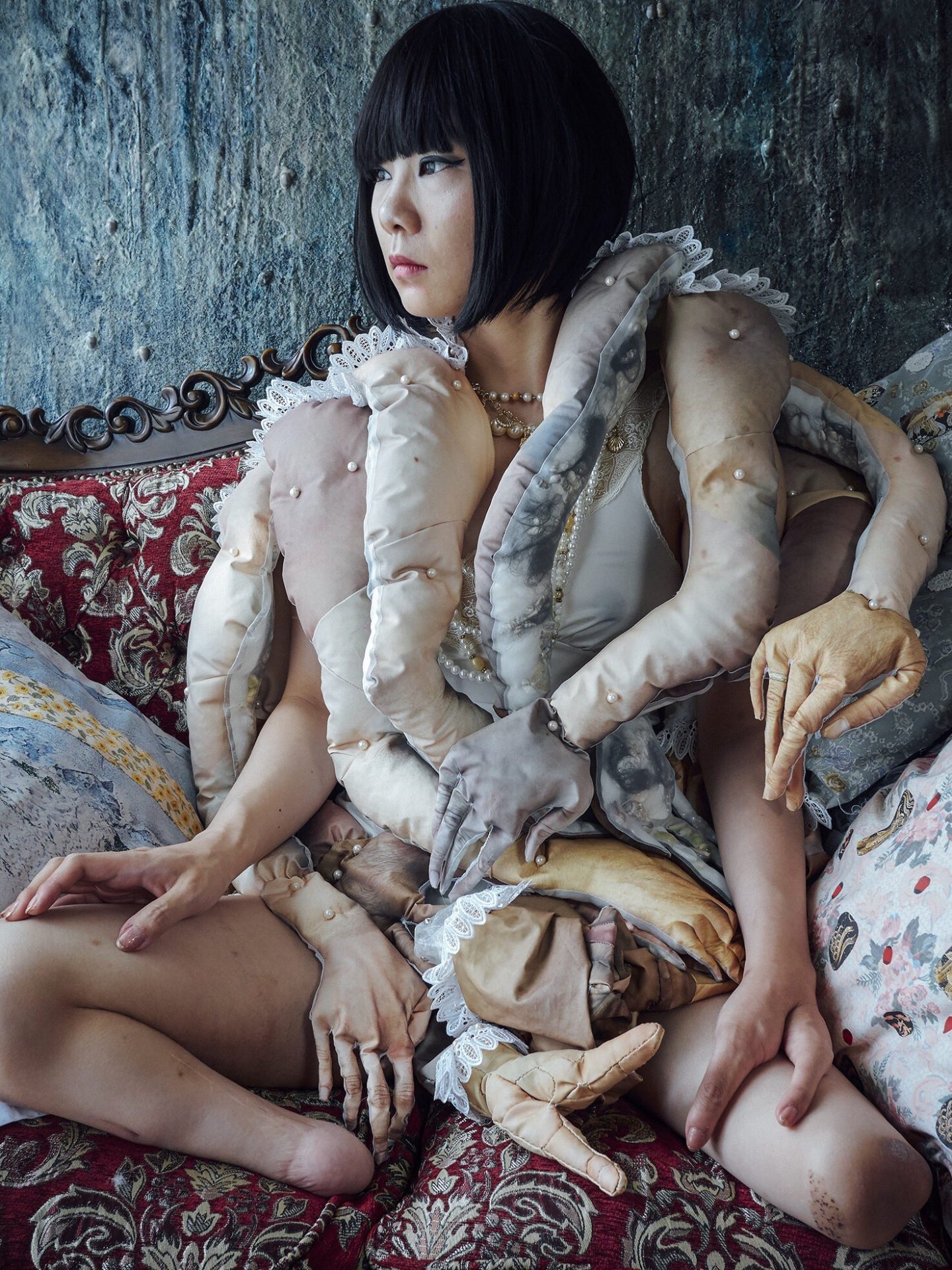
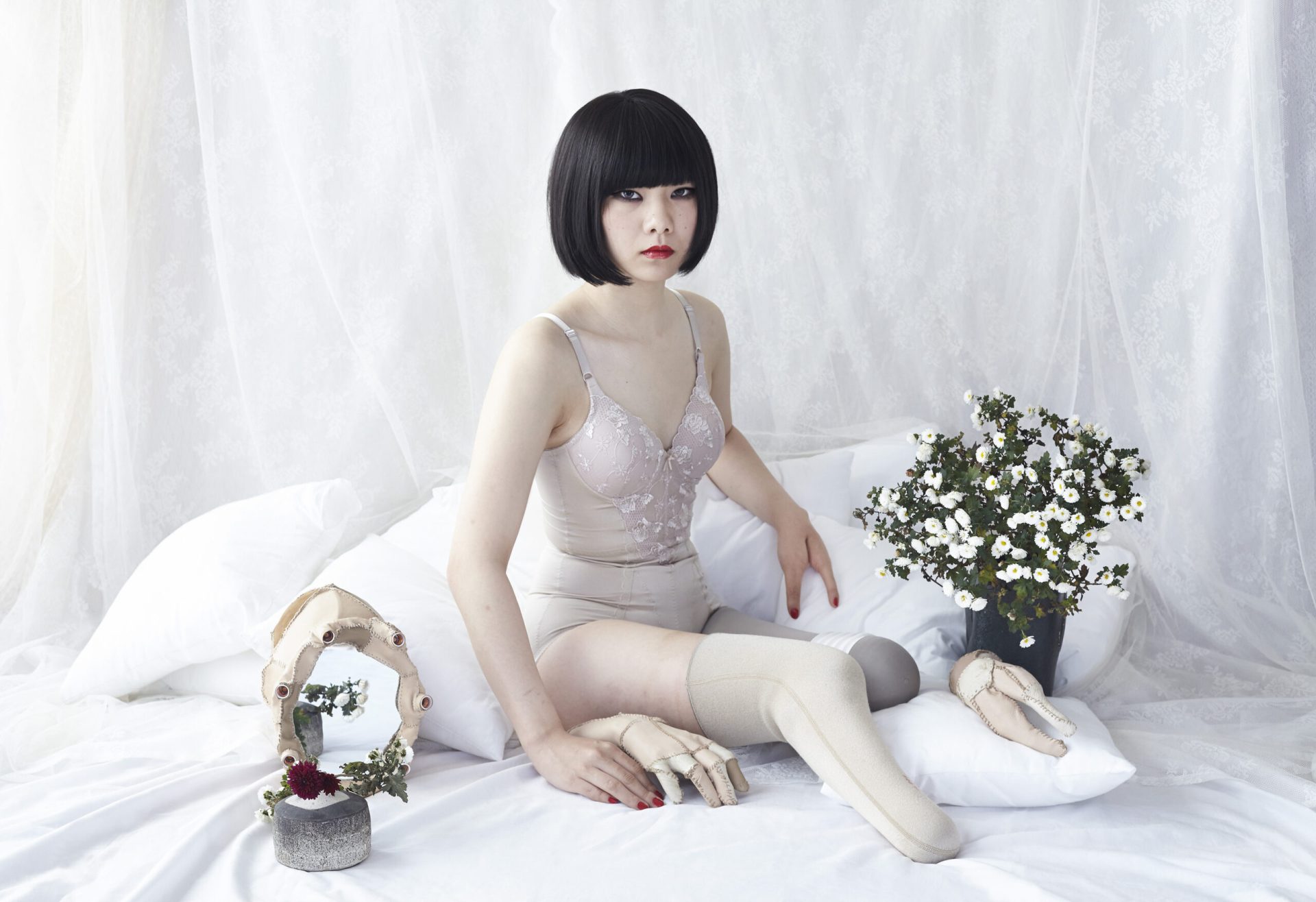
Antony Crossfield, an artist based in London, manipulates his photographs to create new ways of looking at our natural forms. Series like “Second Skin” take the outer shell of the human body and pushes it outside of the boundaries of superficiality. It’s in these exercises that Crossfield aims to “to present the body not as a protective envelope that defines and unifies our limits, but as an organ of physical and psychical interchange between bodies.”
 Kiev-based photographer Oleg Oprisco's works modify small details in their real-world settings to convey the essence of fantasy. It is as if his photos give off the fresh, dewy aroma of a wild escape to a desolate countryside that seems to belong to no specific time or place. In one piece, a girl holds up a rolled-up piece of a grassy lawn. Though anyone could do this in real life, in the photograph she seems to wield a sort of power over the land with her powerful, summoning gaze. In another, a model holds a stained umbrella that briefly gives the impression of a multi-colored rain shower before Oprisco's process of dousing the set in paint gives itself away. These small details invite viewers to indulge Oprisco's innocent, storybook-like fantasies.
 Underwater photographer Elena Kalis makes fairytales a reality and turns the ordinary into dreams. Looking through her lens is like being transported into an imaginary land. Based in the Bahamas, Kalis makes use of the nearby ocean as her studio. Her models may be holding their breath but they express deep, whimsical emotions in complex poses that can only be achieved in water. In some portraits, they are literally walking through a magic portal that is the surface. For her Alice in Waterland series, we follow Alice as she steps into a crystal blue looking glass and floats down an invisible tunnel to have tea with the Mad Hatter. It is a story told a thousand times over, but Kalis manages to bring a fresh perspective with just the natural beauty of nature. Read more after the jump.
 Pennsylvania based photographer Peter Olson has found a unique way of presenting his photographic prints. Also a sculptor, he doesn't stop at traditional photo paper- his photo-montages of people and places he's visited are produced on a series of ceramics that he calls "Photo Ceramica". Olson's photos are encased on each piece, left by ink from prints that, when fired, burn away and leave a permanent image from the iron oxide in the ink. The form of a three-dimensional object, such as an urn or a plate, instantly makes his photo works more dynamic and complex.
 The frozen textiles in the outdoor installations of

 Kara Walker's recent Hyundai Commission is a 45-foot-high fountain at Tate Modern, exploring the historical tether between Africa, America and Europe with inspiration from the Victoria Memorial in London. Water, Tate says, has its own significance in the work, “referring to the transatlantic slave trade and the ambitions, fates and tragedies of people from these three continents.” The title of the work: “Fons Americanus.”