


In his first exhibition in Hungary, Dmitry Kawarga’s “post-human” sculptures and installations reflect on humanity’s vulnerability. His “Anthropocentrism Toxicosis” series, in particular, is on display at the Ferenczy Museum, with works built with polymers and occasionally, usage of 3D-printing processes. The exhibition runs through Sept. 15.


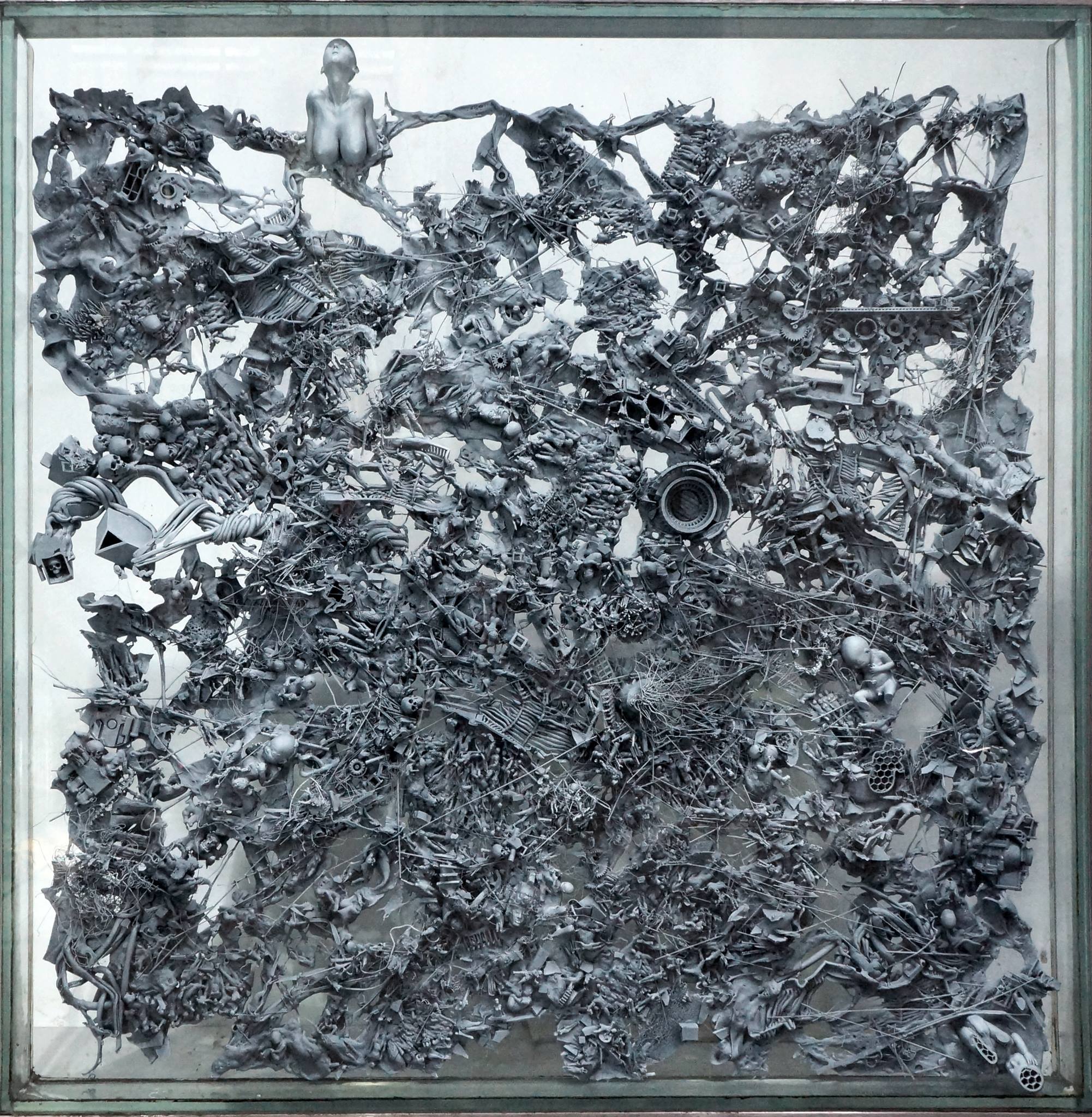
“In Kawarga’s view, humanity will soon disown its biological self, and separate from its physical body,” the venue says. “However, in addition to looking at how things human and non-human are related, and using the opposition of organic nature and geometric technology to reveal how the population changes, this special artistic project shows these changes, above all, in the crisis of anthropocentrism, which posits man as the centre and ultimate cause of the world. Objects are presented in Plexiglas cylinders, compacted in prisms, and sometimes on their own: discarded things that have survived their own worlds, flowing over and covering a postapocalyptic wasteland.”
Read more on the venue’s site here, and find more from the artist here.


 Japanese artist
  In Prescilla-Mary Maisani’s latest series of sculptures, "Frog's Dynasty," she presents amphibian deities that reflect contemporary self-infatuation. Displayed poolside, their obsession with luxury is underscored, with the artist recently displaying these works in Corsica. While previous series manipulated the human form, Maisani’s new set takes a more cartoonish and sardonic turn.
 Kati Heck's wild paintings, sculptures, textile work, and photographs are featured in a new show at