

 There’s a problematic aspect to
There’s a problematic aspect to Hiromi Tango’s sculptures that invites the viewer’s intervention, simply because they are a complete mess. Tangled bits of string, plush and rigid baubles are knotted together into a bulbous hodgepodge around a core of light, sometimes with a single word sculpted in neon at the center. Strands of fabric and material reach out like dendrites on a neuron, feeling for a connection but isolated from everything on a blank white gallery wall, asking the viewer to sit a while and try to untangle it.
Like the frantic nests of a neurotic bird, these giant tangles are usually made of materials in tones of the same bright color — blue, yellow, pink — suggesting an underlying categorization system to the outright jumble. On display at Sullivan+Strumpf in Sydney through May 31, Tango’s “Promised” show has been discussed in outright psychological terms, of trying to parse issues like color’s impact on emotions and the materialization of trauma through art (which factors nicely in with the neon words, like “mum”, “promised” and “tears”). But the implications of psychology are also found in the sculptures’ analogy to neurobiology — to the physical parts that compose human consciousness. Not only is Tango laying her consciousness bare, but she is baring its underlying anatomy in neon and assemblage.


Detail


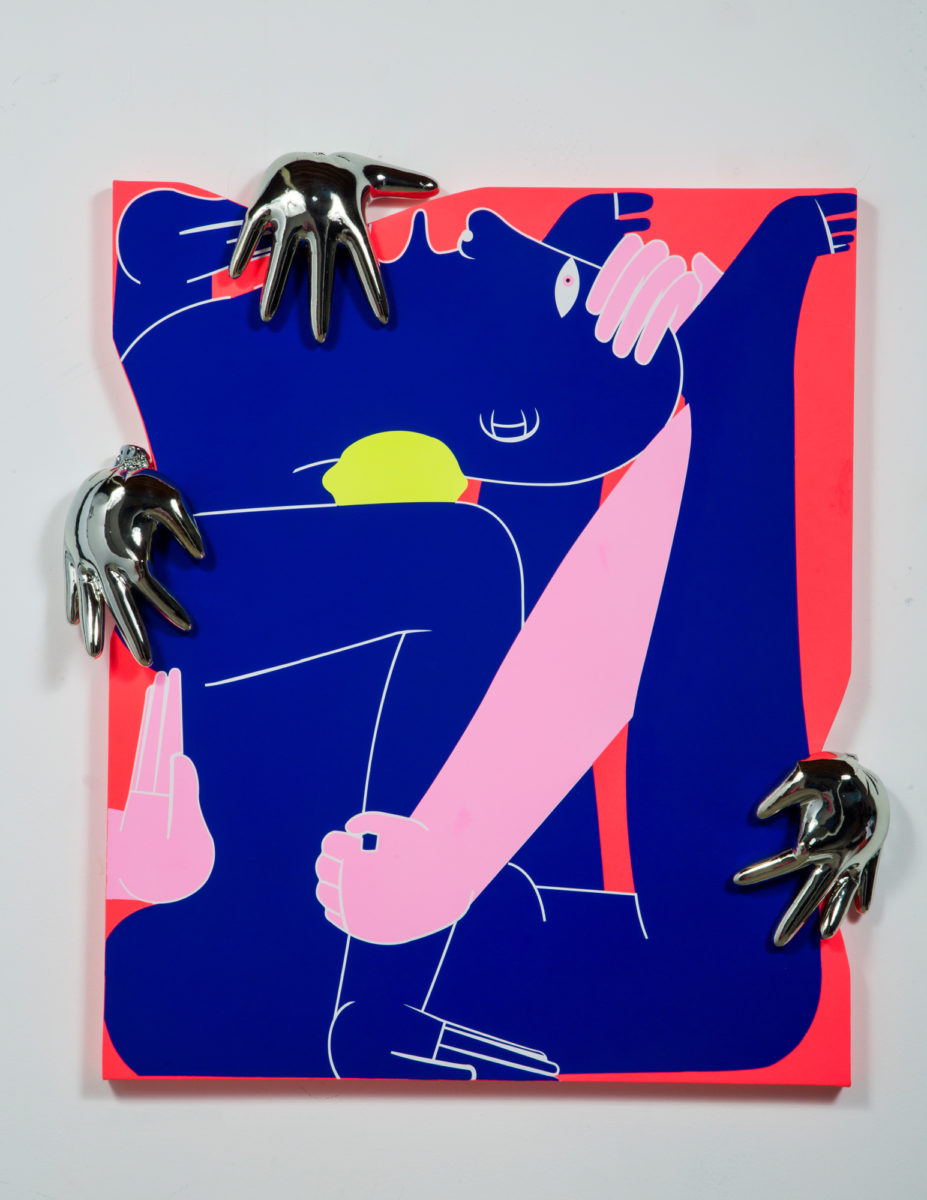 Blending two- and three-dimensional forms, Mark Whalen creates cerebral and absurd arrangements of the human body. Whether stacking vibrant heads or using sculpted hands to sculpt the very shapes of canvases, there’s a metatextual component in tackling the act of creating art itself.
 Spanish artist
  British artist
David Cerný Makes Social Commentary with Controversial Public Art