In “My Little Corner of the World”—its title derived from Yo La Tengo’s cover of the ‘60s love song of the same name—Seckel includes a few real life references, like a painting within the painting of a swamp at night that was inspired by a kayaking excursion. “It got dark when we were out and then coming back, just looking at the stars through the overhanging cypresses and stuff was really pretty,” he says.
In a way, a painting like “My Little Corner of the World” becomes a self-portrait, although, Seckel says, that’s not intentional. “I guess any painting is a self-portrait in its own way,” he surmises. “Maybe some more than others, though.” But, he clarifies, “I’m not trying to express myself as me.” Instead, he says that he’s “mostly thinking about the space on the painting.”
The paintings are pretty much me reacting to stuff immediately, and rarely these self-conscious, broad summaries of a passage of time…”
“Wetlands” is inspired by a real spot where large electrical polls are surrounded by swampy grounds. “You always see birds,” Seckel says. “Birds and trash. That’s the edge of all the swamps around here.” The railroad tracks in New Orleans are similar, he says, noting, “I’ve always appreciated the stuff that you find walking around, the stuff you see.”
In addition to painting, Seckel makes zines using a Risograph printer. He was first introduced to the old school machine with the cult following back in Philadelphia, but it wasn’t until he moved to New Orleans that he became enamored with it. Seckel has two Risographs in his studio. One was procured from a Piggly Wiggly grocery store in Alabama for $80. The other came from a church in Alabama. Neither works at 100 percent, so he uses them for different tasks. Seckel likes the aesthetics that come with the Risograph’s process of printing one color at a time. Plus, it’s useful to his practice.
“It takes a lot of the labor out of printing stuff,” says Seckel, adding that it has become a “community resource” as well. In addition to using the Risograph for his own work, he’ll print flyers, posters, and other materials for people as well. “You’ll meet people, interact with the people you live with and all that,” he explains.
Seckel’s latest zine, Pink Tape, contains a mix of cell phone photos taken in the first few months of 2019, as well as recent drawings and photos of paintings that he has produced since late 2018. He tries to make a couple zines or books every year that end up documenting his life at the time. It’s a part of his practice that has some connection to his paintings. “They’re definitely supporting each other in ways,” he says of these two facets of his creative work. “They’re definitely not totally separate, but they’re not co-dependent either.”
One major difference between the projects is their scope. With zines and books, Seckel says, he’s putting together “a survey of a much broader period of time rather than the more focused thoughts that happen in the paintings.” Conversely, “The paintings are pretty much me reacting to stuff immediately, and rarely these self-conscious, broad summaries of a passage of time or something.”
But there’s a correlation between these works in that both rely on the artist’s observation of the mix of nature and human-made objects that fill his world. Seckel captures surroundings so ordinary that they may often be ignored, but he uses those details to fill worlds that straddle real life and imagination.*
This article originally appeared in Hi-Fructose Issue 52, which is sold out. Get the next print issue with a new subscription to Hi-Fructose here.


 Seamus Conley's recent oil paintings offer a convergence of reality and digital fantasy. In that latter world—and in materialism—there’s a hope for fulfillment that Conley explores. His recent body of work is currently on display at Andrea Schwartz Gallery, in a show that runs through Dec. 21.
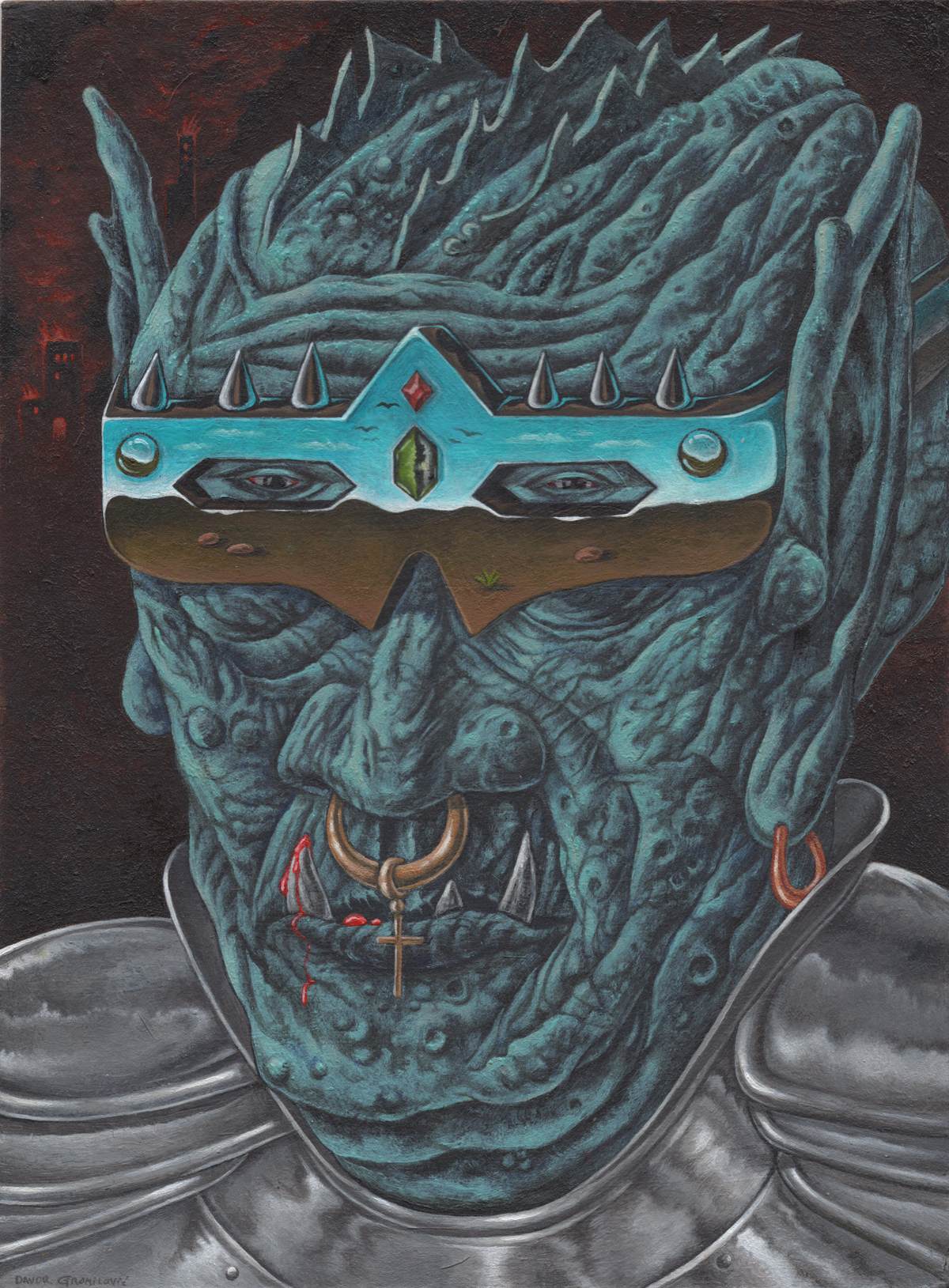 Davor Gromilović continues to craft lush fantasy worlds in his drawings and paintings, with both massive scenes and intimate looks at his monsters. The artist is constantly experimenting in his works, toying with perspective in odes to NES games or blending textures. Gromilović last appeared on our site here.
 Originally from Japan, Yasuaki Okamoto lived in Barcelona, London, and Montreal before settling down in New York, where he is currently based. His paintings of quirky underwater scenes take inspiration from various experiences he had during his world travels. Through a storybook-like style, Okamoto paints cornucopias of brightly-colored sea creatures and underwater plants. His work draws a stark contrast between this aquatic paradise and the war and chaos on the earth above. While fighter jets and satellites fly through the sky, the colorful creatures coexist in perfect harmony under water.
 French artist Antoine Cordet’s ghostly acrylic and oil paintings appear as portraits that have been tampered with, whether out of disdain or abstractions arising from memory. Despite the seemingly despondent expressions of its subjects, the paintings are given an unexpected energy from these touches. Adding to the mystique is the attire of the youth in the images, which ranges from contemporary to vague costumes. The artist was last featured on HiFructose.com here.