


Using transparent cloths clad to the canvas, painter Pavel Gempler creates a “second skin, through which the lower pictorial layers shine through and create an irritating doubling,” the artist says. The result is both captivating and creates a pixelated effect to his works, which then carry photograph-like benefits of the light.


“The central theme of my work is the transition of visually reproducible body and objects, which are oscillating between mystery and triviality, fullness and emptiness,” the artist tells us. “I deal with attitudes and symbols of the body, which seeks to hide in masquerades, which is a place of desire, communication and life. I work with individual expressions of the body that are degraded to the point of insignificance by the consumer society and reproducibility. In recent works, I actively intervene in the image. With this work strategy, the painted representative units are first destroyed and then reassembled under my aegis.”
See more of the artist’s work below.


 The surreal paintings of
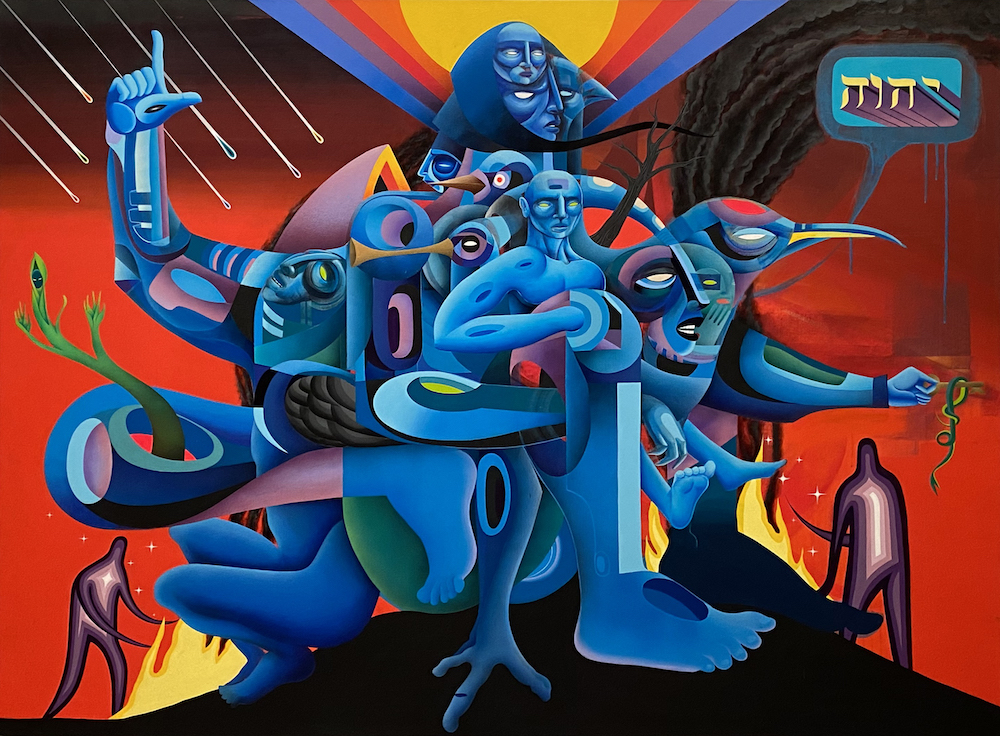
 With “A Volta,” Allouche Gallery looks at the evolution of the legendary b-boy and street artist Doze Green through paintings and drawings. In the show, viewers find an artist who influenced a generation and a transformative moment in his practice upon moving to Brazil. Green was most recently featured in Hi-Fructose's print magazine with
  While collecting stones along the east coast of his hometown in Maine, it dawned on artist