


Deirdre Sullivan-Beeman’s “Heavy Water” brings new paintings from the surrealist to La Luz de Jesus Gallery, inspired by the substance created from tap water for nuclear energy research in the 1930s. Using oil and egg tempera on aluminum panel, the artist’s works have a particular glow, implementing centuries-old techniques for the effect. The show runs Oct. 4-27 at the space.


The gallery offers some historical context for the show: “Heavy water contains heavy hydrogen, also known as deuterium, that replaces the hydrogen found in tap water,” the gallery says. “Used mainly as a component for nuclear reactors and weapons, heavy water combines with Uranium 238 to create nuclear fission. The taste and smell of heavy water is no different than tap water, and one would not notice a difference at first consumption if heavy water were to replace it. This unknown portal is where Sullivan-Beeman invites the viewer to navigate her subconscious environment– exploring concepts of weightlessness, survival, and the mysterious depths of the sea while featuring her recurring characters in roles of perseverance.”
See more from the show on the artist’s site and La Luz’s page.


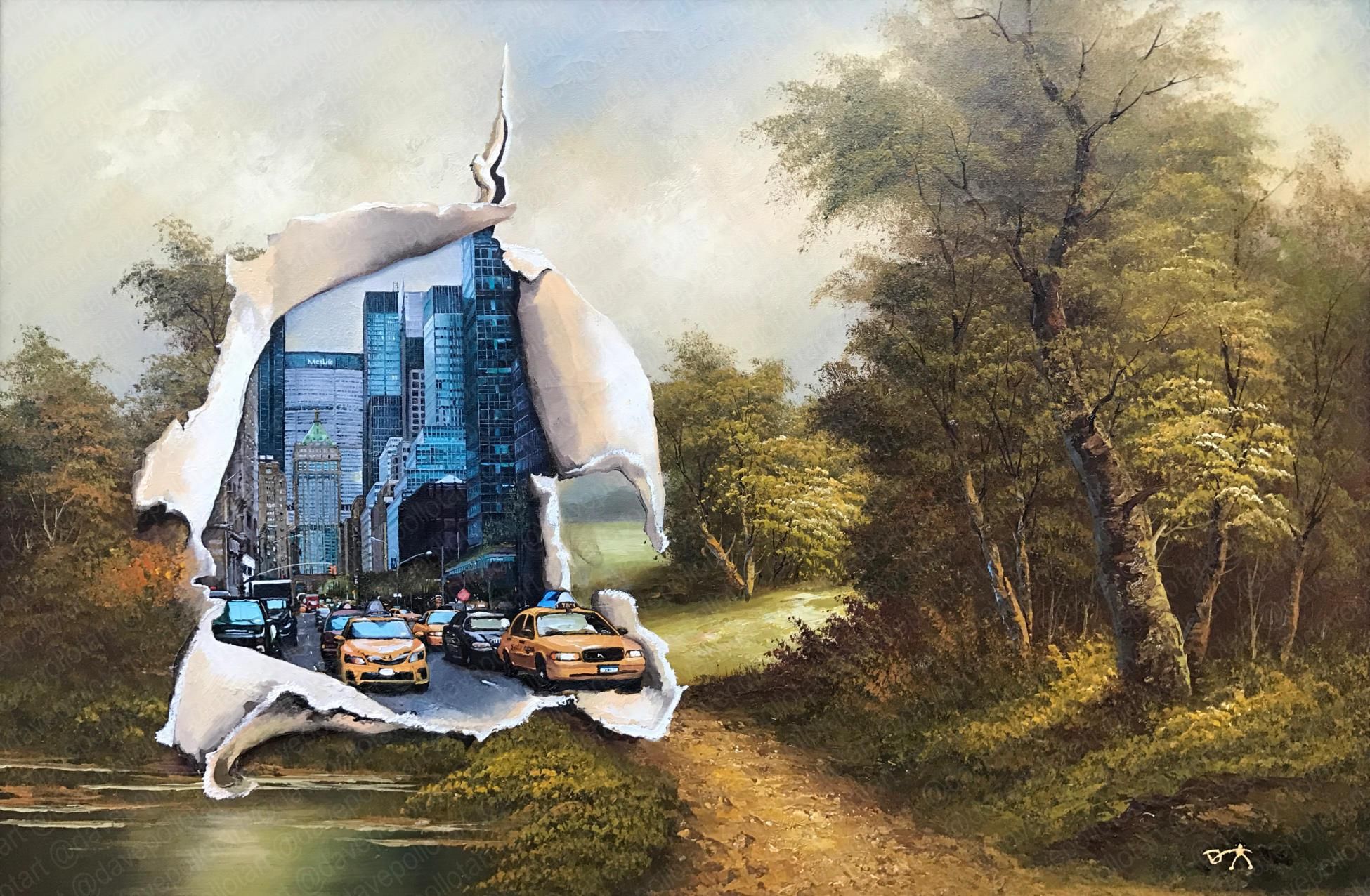 Dave Pollot revitalizes thrift store paintings with surreal or pop culture-centered flourishes. The artist recently painted giant banana duct taped to an existing mountainous backdrop for a piece auctioned for charity. The reason: Pollot says these conversations “can happen while people have little or nothing to eat."
 American artists — from the painters of the Hudson River School to the influential Andrew Wyeth — have long depicted this country’s vast landscape as simultaneously a place of lonely desolation and of awe-inspiring grandeur. Following in this tradition,
 While
While