Menu
The New Contemporary Art Magazine

Emil Alzamora’s Latest Sculptures of Distorted Human Figures

The human body was one of the earliest subjects of sculpture, predating galleries or artistic statements or even recorded history. Even today, the functions range from ritualistic to iconographic, decorative to narrative-driven. Seeing the form through the lens of Emil Alzamora, the human form’s possibilities are stretched further. At times, his works feel like allusions to the physical body, marked by familiar positioning and distorted states. And in eroding away the things that may seem personal about a figure, like clothing, facial features, or age, universal stories unfold.

The human body was one of the earliest subjects of sculpture, predating galleries or artistic statements or even recorded history. Even today, the functions range from ritualistic to iconographic, decorative to narrative-driven. Seeing the form through the lens of Emil Alzamora, the human form’s possibilities are stretched further. At times, his works feel like allusions to the physical body, marked by familiar positioning and distorted states. And in eroding away the things that may seem personal about a figure, like clothing, facial features, or age, universal stories unfold.

When Hi-Fructose last visited Alzamora’s work, the subjects felt more direct. A “Spaceman” (2011) fell to the ground; another figure reflects into the mirror with somberness. Before that, in another Hi-Fructose post, a neck elongated and snaked around the body and above, finding a new vantage point. These were complex, provocative, gorgeously rendered works. And there came a point, during the past few years, that Alzamora’s work garnered a sense of simplicity (or “distilled or eroded,” as the artist has stated). An anonymity and androgyny was seen in sculptures in his 2015 solo show at Marc Straus Gallery in New York City. Yet, entering the room with the pieces shown above, the viewer feels the presence of a narrative already unfolding.

The materials Alzamora uses change regularly: gypsum, wood, ceramics, wax. Each informs the figures we meet through Alzamora’s hands. And as far back as the medium goes, these personal, yet anonymous sculptures feel as though they’ll resonate far into the future.


Meta
Share
Facebook
Reddit
Pinterest
Email
Related Articles
Genesis Belanger's ceramic sculptures take everyday objects and inject a strange strain of humanity into them. The works, often mixing stoneware and porcelain, carry both humor and surrealism in this active evolution. All are so vivid and burlesque in their execution that they appear to be ripped out of an animated world.
Kyoto based artist Teppei Kaneuji creates bizarre multimedia works that examine the mass consumption of his culture. He is perhaps best known for his Manga-inspired characters made of objects like plastic food, toys, scissors, and furniture parts. This is a fascination that has followed him since childhood, when he enjoyed playing with blocks and putting together everyday objects. Opening September 10th, Kaneuji will make his US solo exhibition debut at Jane Lombard Gallery in New York with "Deep Fried Ghost". The exhibit showcases the artist's five most notable series from 2002 through today: "White Discharge", "Muddy Steam from a Mug", "Teenage Fan Club", "Ghost in the Liquid Room", and "Games, Dance, Constructions, (Soft Toys)", in addition to new pieces created for the show.
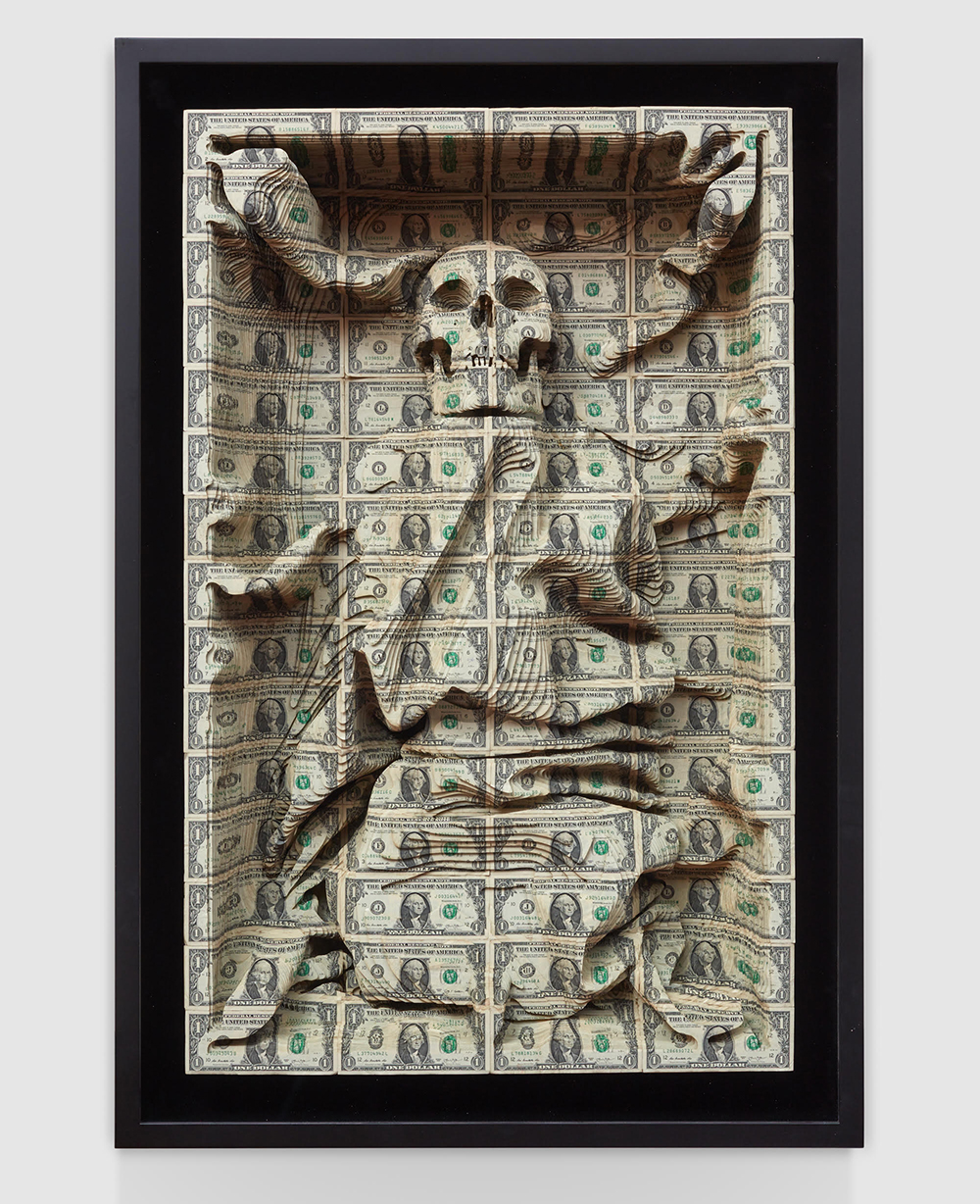
Scott Campbell’s sculptures crafted from cut currency reveal grim spectres. In his current show at Over the Influence Hong Kong, titled “Using All The Freedoms We Have,” new works are presented. Campbell was last featured on HiFructose.com here.
Azerbaijani artist Faig Ahmed draws from the rich tradition of Middle Eastern carpet weaving to spin surreal creations that seem to defy physical laws — and the staticness of cultural relics. Sometimes his carpets appear to melt, their patterns dissolving into a pool of swirling colors like an oil slick, and other times they become three-dimensional, rising up in sharp spikes that defy the two-dimensional form. These are not carpets to be walked upon. Since we introduced Ahmed on the blog last May, he has created a new body of work that will debut at Cuadro Gallery in Dubai on September 14. A unique space in Dubai's financial center, Cuadro is a non-profit gallery where Ahmed recently completed an artist residency. Take a look at some photos from Ahmed's studio and his new works below.

Subscribe to the Hi-Fructose Mailing List