Menu
The New Contemporary Art Magazine

Ron English’s “Sugar High” Exhibit Addresses the Issue of Overeating

Obesity is gaining legitimacy as a health epidemic, especially in America, the birthplace of the fast food chain. But it's not a new issue for Pop Surrealist painter Ron English. First featured in Hi-Fructose Vol. 12, his colorful anti-corporate and cartoon-inspired works have long addressed his interests in all things mass-produced, including food and our increasing tendency to over eat.

Obesity is gaining legitimacy as a health epidemic, especially in America, the birthplace of the fast food chain. But it’s not a new issue for Pop Surrealist painter Ron English. First featured in Hi-Fructose Vol. 12, his colorful anti-corporate and cartoon-inspired works have long addressed his interests in all things mass-produced, including food and our increasing tendency to over eat.

One of his most well known characters is “Mc Supersized”, featured in the 2004 hit movie “Supersize Me,” English’s interpretation of Ronald McDonald as a fat Buddha eating a diet peddled by the famous fast food restaurant chain. It has been recently argued that our taste preferences such as a “sweet tooth” are innate to human biology. For instance, research is finding that certain sugary foods can trigger brain responses that are similar to people’s reactions to addictive substances, giving new meaning to the idea of a “Sugar High”- the title of English’s latest solo offering opening at Dorothy Circus Gallery in Rome this weekend.

The exhibition follows in the tradition of his playful, signature mash-up of high and low cultural icons, exploring into what he calls “the dark depths of fast food”; making a reappearance is sugary cereal mascots like “Fat Tony”, “Mc Supersize”, in a print series of 13 multi-colored figures, and “Uncle Scam”, a play on Uncle Sam, who takes the place of Jesus Christ at the center of the Last Supper, based on Leonardo da Vinci’s late 1490s mural painting in Milan re-titled “Uncle Scam’s Last Breakfast.” Though they are humorous and surrealistic, English’s characters point out an undeniable truth about the strong link between mascots and advertising to our overeating. His exhibit investigates their power to shape people’s tastes and choices related to food and, consequently, to our health.

Meta
Share
Facebook
Reddit
Pinterest
Email
Related Articles
Tokyo-born artist Masaaki Sasamoto creates surreal worlds bathed in gold, mixing mythological iconography and the painter’s own, distinctive figures. The butterfly is one of the most common components in Sasamoto’s work, whether enveloping his subjects or fully embedded into them. Some of these scenes also carry notes of steampunk and futuristic, manga-inspired flourishes.
Ever the astute aesthete, Esao Andrews (previously covered in HF Vol. 8 and online) brings a renewed sense of clarity and purpose to his latest body of work. His new paintings will be featured at NYC's Jonathan LeVine Gallery from October 11 through November 8 for Andrews's upcoming solo show, "Epilogues." For this series, the artist embraced some of his signature motifs, bringing them back into the studio and furthering their growth. The ongoing narrative in his work, as Andrews tells us, needed a conclusion, a way to say farewell and move forward with his pursuits. This exhibition of painting provides him with just that: closure. In "Epilogues," we are treated to a visual feast of some of Andrews’s most well-known images as they would appear as aged, matured and weathered in his trademark tonality, creating transcendent moments of haunted familiarity.
Polish painter Ewa Juszkiewicz subverts canonical portraiture by playing with viewers' expectations. Poised damsels that evoke Renaissance-era nobility stand with their hands clasped and their faces replaced by oyster mushrooms, cockroaches and shrubbery. It's as if in spite of all the pains these ladies have taken to appear proper and civilized, nature has reasserted its dominion. Juzkiewicz is specifically interested in portraits of women and uses her work to study the ways women have been presented over the course of European history.
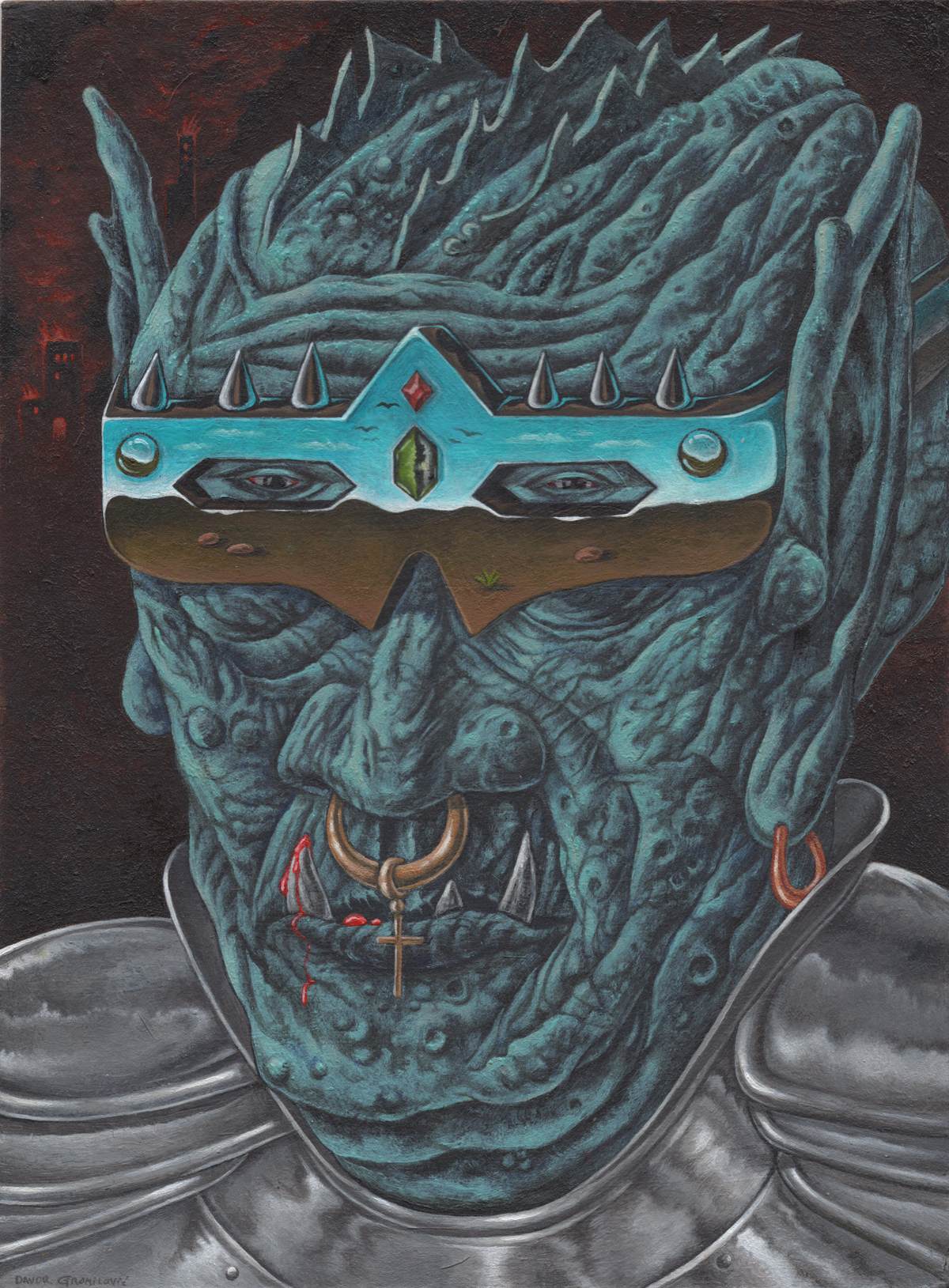
Davor Gromilović continues to craft lush fantasy worlds in his drawings and paintings, with both massive scenes and intimate looks at his monsters. The artist is constantly experimenting in his works, toying with perspective in odes to NES games or blending textures. Gromilović last appeared on our site here.

Subscribe to the Hi-Fructose Mailing List