


Though hyper-realistic dolls aren’t a new invention, Michael Zajkov finds a stirring balance of engrossing detail and beauty that isn’t idealized perfection. The Russian artist’s sculpts don’t just look realistic—they look like real people, even if they’re not from this century. When the creations don early-1900s attire and are posed with 13 movable joints, their humble expressions bring viewers closer, if not a little cautious, in case they begin to move.


For others, there’s something far more ominous about Zajkov’s in-progress shots. As the artist holds unfinished heads in hand and adjusts wigs made of French mohair, the vibe of his process becomes Burton-esque, armed with scalpels, knives, and polymer clay. The turning point for each new doll, it seems, is the application of the glass eyes, crafted in Germany. (He even crafts the shoes and boots himself, an indication of Zajkov’s omnipresent creative process.)

Zajkov first broke through the mainstream with five dolls, Anastasia, Antonina, Zoe, Nina, Xenia, at the Art Dolls exhibition in Moscow in 2013. The artist was fresh off graduate school and a job as a sculptor in puppet theater. He received his undergrad degree from Kuban State University of Russia in 2009, where he majored in graphic arts and specialized in sculpture. The groundswell at the 2013 expo was enough to garner fame for Zajkov and now, many more dolls.


 Based in Lisbon, Portugal,
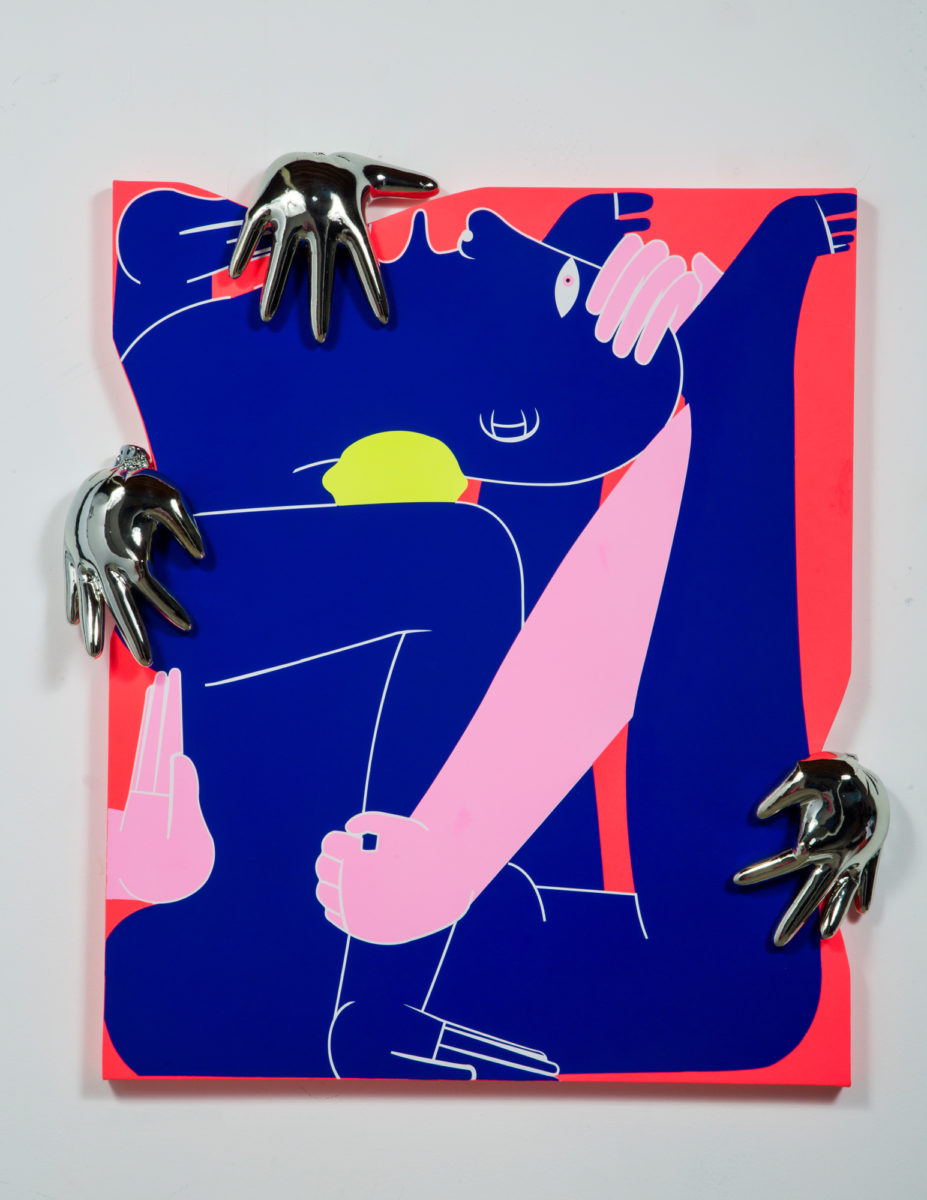 Blending two- and three-dimensional forms, Mark Whalen creates cerebral and absurd arrangements of the human body. Whether stacking vibrant heads or using sculpted hands to sculpt the very shapes of canvases, there’s a metatextual component in tackling the act of creating art itself.